How Bunk Bed Kids Has Changed The History Of Bunk Bed Kids
Are Kids Ready For Bunk Beds? Bunk beds are a great choice for kids rooms that are short on space. They can be used to study space or playroom during the day. When your kids are ready to move into a bunk bed, you will be required to evaluate their dexterity and maturity. You will also have to look at their sleeping habits. Age of Transition from the Top Bunk There is no one-size-fits-all answer to this question, as the age at which kids are ready to sleep in bunk beds varies widely. However, most experts recommend that children don't sleep on the top bunk until they are at least six years old. Children under 6 years of age aren't likely to have the dexterity and maturity to safely walk up the ladder. They may also have trouble understanding and following safety rules, such as not climbing over the guardrails, or jumping off the top bed. It's also important to take into consideration how rambunctious your child is when determining if they're suitable for bunk beds. Children who are reckless or who do not respect the rules shouldn't use bunk beds as they could result in serious accidents. Children who are more likely to fall out of the bed or are taller than average, might not be able to use the top bunk safely even if they're 6 years old. older. 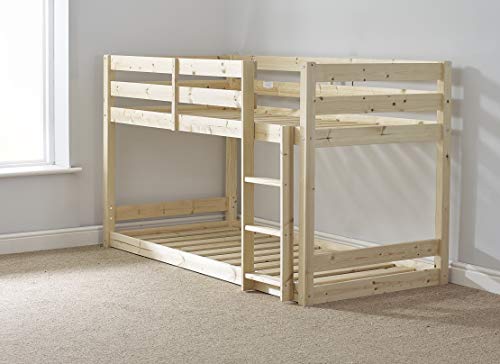 As they grow older, their bunk beds may be too small. In this case it's best to move them to a conventional bed so that they can sleep more comfortably and with more space. It could be as easy as changing to twin beds, or as difficult as purchasing a fun treehouse-style bunk bed, such as the Mathy by Bols that can convert into a full size bed. When you are making this transition, it's best to begin with the lowest bunk and work towards the top. By doing this, you will be sure that your child is mentally and physically ready for the transition. This will help them avoid from becoming discouraged if do not immediately get the chance to move up to the top bunk. It's also an excellent idea to educate youngsters the importance of observing safety rules, regardless of the position they are sleeping on the bed. This includes teaching children not to jump off the bunk, to never hang items from the rails and to use the ladder correctly. Safety Considerations Bunk beds can be a wonderful sleeping solution for children However, it's vital to be aware of dangers that could pose to your safety. Understanding the risks, following the instructions for assembly of the manufacturer, and taking other security measures will help make sure that your kids have fun in bunk beds without risk. One of the biggest dangers to safety is the ladder, which could be used for climbing to and from the top bunk. If kids aren't properly watched, they could use the ladder to play and could end up with dangerous consequences. Ladders that are improperly secured can fall off the side of the bunk bed, pinning children underneath and potentially leading to fatal head injuries. Children may also mishandle the ladder and lose their balance when trying to climb it, which could result in an accident. To decrease the risk of accidents, always make sure your children use the ladder for going up and down, and not for play. It's also an ideal idea to place some type of light near the ladder, for example a night light. This can help illuminate the path up and down the ladder in the dark and prevent children from falling off or slipping over the furniture or other items in the room, like furniture or toys. Safety considerations include making sure the mattress fits into the frame of the bunk bed properly making sure the bed is placed away from windows, blinds, ceiling fans and cords, and ensuring there aren't sharp edges on the ladder or the bunks. It is also essential to prevent rough play and horseplay on the bunks as it can cause structural damage and injuries. Before you allow your children into the bunks, make sure that there are no loose bolts or weak spots, or any other danger zones. Be sure there aren't any gaps between the safety railings, headboards, or ladders where a child could fall and get their limbs or head trapped. These gaps should be no larger than 3.5 inches. As per safety guidelines, you must ensure that the guardrails on either side of the top bunk are 5 inches or more above the mattress. How to Choose the Right Bunk Bed There are many options for bunk beds that can create a social and fun room for children. With careful considerations and your children's input, you can find the perfect bunk bed layout that maximizes space while accommodating a range of sleeping preferences and needs. To aid you in the bunk bed selection process begin by looking through a wide variety of finishes and materials to find the right suitable for your child's bedroom design. Take into consideration the style of headboards and feetboards as well depending on your preference for slats or solid panels, or curving bed ends. Choose affordable bunk beds for kids that matches the interior of your home and will be able to withstand the changing trends and time. Then, you can decide if prefer bunk beds that come with a ladder, an angled ladder, or a staircase. Each of these options provides unique safety and convenience advantages. Ladders, angled ladders, and staircases are all options that can make space but are difficult for children who are younger to climb. Standard bunk beds are two twin beds placed perpendicularly over one other, with a staircase or ladder to access the top. Alternately, you can consider a loft bed, that has an open space beneath to store things and a desk, or a play space. These beds can accommodate a full-size mattress at the bottom, and a twin-size on the top. This is an option for sleeping that is flexible for shared bedrooms or vacation homes. It's time to start shopping for the bunk bed that's the best fit for your family. Check out the options at furniture stores, home improvement centers and online retailers to find a bunk bed that meets your kids' needs. Pay special attention to the frame material when selecting the bunk bed. It is crucial to ensure your child's safety and ease of use. Avoid low-end, cheap materials that may sag quickly or break. Additionally, you should choose solid woods instead of particle boards made from smaller wood flakes, which are glued together, since they are more durable and provide more stability. Getting Started bunk bed for kids of children will eventually be enthralled by the idea of a bunk bed. They're an ideal solution to rivalries between siblings about who has the best bunk, and an excellent way for more than one child to be accommodated into a smaller space. Bunks are a great option to host sleepovers for friends and have fun without having to buy extra bedding. If you are deciding on the ideal bunk bed for your family, there are some important aspects to take into consideration. Consider whether your children will be able to get into and out of the top bunk safely and comfortably. This is especially crucial for children who are prone to sleepwalking, or who have difficulty avoiding rolling over the bed's side. If they can't do this easily then a ladder could be the best option. Another crucial aspect to consider is the overall design and style of the bunk bed's design and style. You'll want to make sure that it fits in with the design of your bedroom and that your children are happy with it. Bunks come in a range of styles from traditional to contemporary. They can be constructed of different materials such as pine or MDF depending on your preferences. It is a good idea to make a list of all the tools you will need before you begin making your bunk beds. This will prevent frustrations like realizing that you've missed an important screw midway through the process. Making your bunk a bit more creative bed can really add to its appeal for your kids. There are a variety of interesting accessories you can choose from. For instance themed bed tents could transform the top bunk into a castle or fort. Your children will be thrilled to play in the bunk all day and night. ). Kids are notorious for leaving their toys lying around, so you'll probably have to encourage them to put them away after they are finished playing. You can keep your child's room neat and tidy with a bunk bed with storage built-in.